
Archie Dan Smith, MD is a retired physician living in Austin, Texas. Here is how he describes his tennis journey, leading to the creation of his work on muscle memory: “I played for 2 years at my small town high school. For the next 10 years I played a dozen times a year with friends. Then I did not play for decades. About 10 years ago I began to play again. I was a mid-level 3.5 player but I could tell over time my game was slipping. During this period I came up with and started implementing my theories on muscle memory. I started getting better. Two years ago I won the 3.5 men’s singles division in the long running main City of Austin tournament. I beat a 26 year old in the finals. Now I am recruited by USTA teams that have won regionals, and I play #1 doubles for a team in the Austin Tennis League. I conclude that there may be something to my theory.” “I played for 2 years at my small town high school. For the next 10 years I played a dozen times a year with friends. Then I did not play for decades. About 10 years ago I began to play again. I was a mid-level 3.5 player but I could tell over time my game was slipping. During this period I came up with and started implementing my theories on muscle memory. I started getting better. Two years ago I won the 3.5 men’s singles division in the long running main City of Austin tournament. I beat a 26 year old in the finals. Now I am recruited by USTA teams that have won regionals, and I play #1 doubles for a team in the Austin Tennis League. I conclude that there may be something to my theory.”

How valuable can mental imagery be in your development and competitive results? Extremely. But this is something that is rarely understood, discussed, or utilized. In my book (Click Here) I detail the results of multiple research studies that show conclusively...

In my first article I said that 3 weeks of muscle memory practice every other day is the optimal period to consolidate new muscle memory. This means practicing on one stroke or shot, trying to hit several hundred high level...

Muscle memory is what determines your strokes and makes your tennis game what it is—for the good or for the bad. Developing muscle memory means consolidating a specific motor task through repetition. Eventually you can perform the task without conscious...
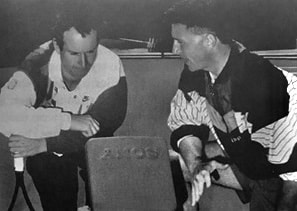
The goal when using mental imagery is to see and feel yourself playing tennis within your own mind, as if you were actually physically playing tennis—seeing yourself as if a real life experience was happening. This is also called mental...