
Allen Fox PhD is a former world class player, a coach, a psychologist, and one of the most original and insightful analysts in modern tennis. A top 10 American player from the glory days before Open tennis, Fox played many of the legendary greats,
among them Roy Emerson, Rod Laver, Stan Smith, and Arthur Ashe. At Pepperdine he developed the men’s tennis program into an elite contender for national titles, and gave Brad Gilbert the insights that became the foundation for “Winning Ugly”.
His book Think to Win is a modern classic. He has also starred in a series of acclaimed videos, including Pro Secrets of Match Play and Allen Fox’s Ultimate Tennis Lesson.
Strategy
Just hit the ball into the open court and make your opponent run. You're in a baseline rally, your opponent hits the ball crosscourt, and you whack the ball down the line into the opening. This strategy has a nice...
Strategy
From the backcourt, most players make a fundamental tactical mistake-hitting into the open court too soon. At the net, the story is the same-too many players lose points hitting into the open court at the wrong time. In the backcourt,...
Strategy
Identify Strengths and Weaknesses The player who thinks to win is able to use a wide variety of tactics to win matches against various opponents to suit various circumstances. What I want to outline here is a whole range of...
Strategy
If we look at pro tennis it's obvious that the successful players win matches for one reason: they know how to win points. That sounds almost too simple. If you know how to win points you can win matches. But...
Mental Game
There is always some fear involved in closely contested tennis matches. And because it often lurks unseen beneath the level of conscious thought, fear can cause a great deal of trouble. In fact, whenever you see a player do something...
Mental Game
I have tremendous admiration for Steffi Graf. Her character was so strong, so practical, and so perfectly competitive that I am in awe of the way she played the game. Even though Steffi has been retired for several years, her...
Famous Coaches
One question comes up quite a bit when I talk to club players and that is, is there a right way to hit a particular stroke and a wrong way? Or is any way that feels good to a person...
Famous Coaches
The purpose of the approach shot is to get you to the net and in position to make a clean volley. The best ball to approach on is a short ball, one that lands on or near the service line...
Tennis History
The lesson to be learned from the career of Stan Smith is that a simple game plan with little variation or adaptability can be extremely effective if it is executed well. Having many strategic options is not always a blessing....
Tennis History
Spain 's Manuel Santana was, along with Rod Laver, a forerunner of today's game in many ways. By winning the French Championship in 1961 and 1964, Wimbledon in 1966, and the U.S. Championship in 1965, he was an early vanguard...
Tennis History
The lessons to be learned from the career of Roy Emerson are that the ability to work harder and longer than anybody else can make up for less than superb physical talent, and an optimistic, happy attitude can turn that...
Tennis History
Chuck McKinley burst upon the tennis scene suddenly, and, like a brilliant fireworks display, lit the sky for a short time and was gone. Chuck proved it doesn't take long to get very good at tennis if you have talent....
Tennis History
There is little doubt that Arthur Ashe was a fantastic physical talent but it was his strength of character and his ability to overcome emotional difficulties with logic and sheer willpower that made him a champion. I first met Arthur...

Strategy
In the first article we analyzed the basic geometry of the doubles court, saw how doubles is fundamentally different than singles, and analyzed the patterns and strategy for your team's serving games. Now let's look at the other half of...

Strategy
Why is it that you see successful doubles teams regularly beat players that they would have no chance against in singles? In singles you might see a player stay on the baseline hitting moonballs and lobs, but in doubles he...

Mental Game
Choking is one of the truly unpleasant parts of tennis competition, and it happens from time to time to everyone, from beginners to world champions. What is it? It is basically debilitating fear! Choking stiffens the muscles and makes even...

High Performance
When people are asked what attribute of the successful coach is the most important, answers usually include "knowledge of the sport," "personal relationship with the players," "organization," "commitment to the team," and the like. Of course all of these are...

Mental Game
Dr. Martin Seligman, a professor of psychology at the University of Pennsylvania, believes that optimists differ from pessimists in that they think negative or bad things are temporary, while pessimists think they are more lasting. Effective competitors must deliberately...

Mental Game
The most valuable commodity a competitor can possess when things are going wrong is "hope." Confidence or self-belief, as helpful as it may be, is not always achievable nor is it always realistic. But hope is. Not only is hope...

Mental Game
An optimistic attitude gives you tremendous advantages –on the tennis court as well as in life. It helps you maintain your drive and a productive emotional state in the face of setbacks. And it almost always means more match wins....
Mental Game
In my 17 years coaching the Pepperdine tennis team I saw many strange things, but none stranger than the serving affliction that Robbie Weiss suffered in his first year at school. Robbie was a great recruit and an even greater...

Tennis History
Rod Laver was a pivotal figure in the history of tennis, a quiet man who's impact changed forever the way the game was played. Up to his time volleyers had a tremendous advantage over baseliners. Laver figured out a way...

Mental Game
In the last article we looked at some ways to increase confidence. Increasing your confidence over time should be a part of developing your potential as a tennis player. The idea is to change how you feel about your game...

Mental Game
Underlying the confidence of victory is your basic confidence level. This is the confidence level that you were either born with or that was formed during early childhood. Nobody knows for sure the parts played by genetics and early experience...

Mental Game
Most of us lack the self-belief of champions. As competitors we are all told, "It is crucially important to believe in yourself." Our coaches tell us that the great players believe in themselves, and this is what carries them past...

Tennis History
Pancho Segura, born in Guayaquil , Ecuador , was deceptive in every way, short and unimpressive physically, but smart, tricky, and a tennis genius. Just looking at him you would never imagine he could be a great tennis player. Pancho...

Mental Game
Many great champions have been chokers but winners, suffering from shaky nerves on important points. What these players all realize eventually is that nerves come and go. They can choke on one point or in one match and later, in...
Mental Game
In my consulting with aspiring young tournament players and even with touring pros one of the most common problems I hear is, "When I am serving for the set or the match I often get nervous and play a terrible...
Tennis History
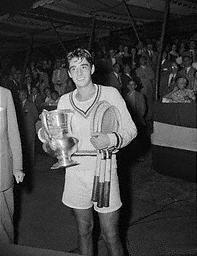
Pancho Gonzales was, arguably, the greatest player of all time. His career at the top lasted an incredible number of years. He won the US Championship at Forest Hills in 1948 at the age of 20, entering the world's top...

Mental Game
Let's take a closer look at the concept of "perfectionism," which I see as substantially different from the common understanding. When people label themselves as "perfectionists" they usually do so with a hint of pride. There seems to be something...
Mental Game
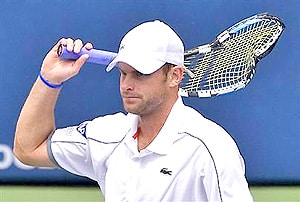
Unrealistic perfectionism is stressful. It is, unfortunately, quite common amongst the driven super-achiever types that populate the high-performance tennis academies where high goals can leave them anxious and stressed. These players are perfectionists and never satisfied for long even with...
Mental Game
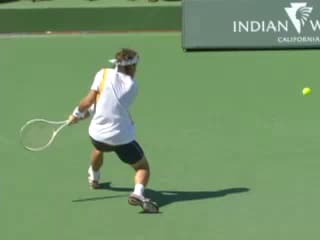
Changing your perspective on competition can reduce stress. As we have seen, serious tennis matches involve fears of failure and are often stressful, and this stress can give rise to powerful counterproductive emotions. These emotions can be controlled, but the...
Mental Game
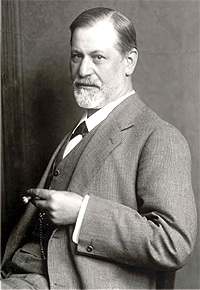
Sigmund Freud pointed out that defense mechanisms, such as the excuses described in the last article (Click Here), are normal and often serve useful and protective purposes. Unfortunately, competitive tennis is not a normal situation, and the useful purposes they...

Mental Game
Emotions are often counterproductive in tennis. Most counterproductive emotional responses during tennis matches are driven by subconscious fears of failure and urges to escape the stress of competition. Charles Darwin would have it that emotional responses generally evolve because they,...

Mental Game
Human beings evolved to live and work in groups. We are a social species, like wolves or chimpanzees, and as such there is a social hierarchy. It is a pecking order or social ranking, and, like the other species, who...

Mental Game
It almost never pays to get personally antagonistic in a tennis match. It will hurt your game. But like many things that involve emotions in tennis, this is easier said than done. This is because on an emotional level, tennis...
Mental Game
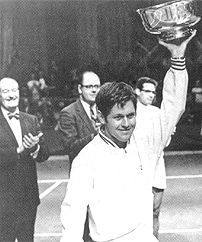
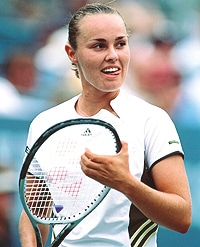
I thought Andre Agassi's book was unusually honest and insightful, but it pales in comparison to Cliff Richey's new book, "Acing Depression." Cliff was a near-great player in the 1970's, achieving the #1 ranking in the United States, reaching the...
Mental Game
Let me be clear to start with that I am not advocating that athletes or anyone else indulge in cannabis, cocaine, or any other recreational drug. The health hazards of most are well-known and severe. I just think that banning...

Mental Game
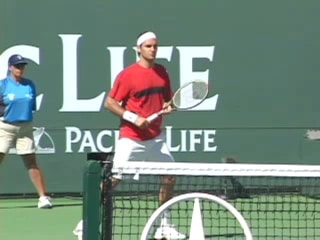
I mean no disrespect to Andy Murray, who handled himself with greatly increased maturity, but really, who wouldn't pull for RogerFederer (other than people from England) in the Australian final? I enjoy his wins, suffer through his losses, and hate...

Mental Game
The tennis scoring system is different from most other sports. It uniquely increases the stress of competition, because throughout the match some points are substantially more important than others. In fact this system is diabolical. In other sports the score...
Mental Game
Anyone who has played tennis for any length of time knows that winning a tough match involves a prolonged and often agonizing mental struggle. The match may last for hours, and to win you must concentrate with intensity from start...
Mental Game
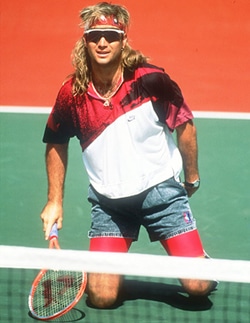
The following is my take on the recent revelations of Andre Agassi in his new book, based on his People Magazine article, his 60 Minutes interview with Katie Couric, and the reactions in the tennis community to these revelations. I...

Mental Game
The champions never forget where their best interests lie. While the winners do not consciously focus on their ultimate goals at all times, they never lose track, at some lower level of consciousness, of what they are trying to accomplish...

Mental Game
What do strong emotions do to your tennis game? Many people think that it's useful to get hyped-up and emotional in order to play their best tennis. It seems to help Rafael Nadal and Maria Sharapova, and it didn't stop...
Mental Game
A closely fought tennis match is a not just a physical battle. It is a struggle of will, mental strength, and character. It is a pervasive personal and emotional contest in which one player ends up on top (at least...
Mental Game
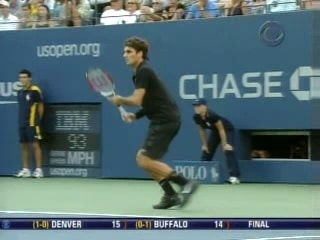
In addition to a display of great tennis by two of the classiest champions in the modern game, the 2007 US Open final between Roger Federer and Novak Djokovic held a number of useful lessons for the astute tennis aficionado....
Strategy
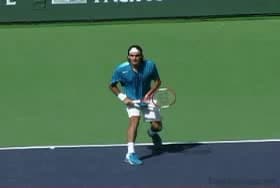
Over the years the game has evolved many times into many different forms. And it seems to be evolving yet again. The volley is beginning to reappear and assume, at the highest levels of the game, increasing importance. But it...

Mental Game
Surprisingly few people are in this world are great competitors. A study done of fighter pilots in World War II found that less than 5% of all the Allied fighter pilots shot down virtually all the enemy planes. The other...